
POINT OF PERSPECTIVE
The Idea
The original plan for this experience was to have the user play from the perspective of secondary characters, viewing the story from the periphery (i.e. a bug on the wall, a security camera, an audience spectator, etc.)
In order to make the experience more interactive, the team elected to shift the perspective to the primary characters, allowing users to more directly interact with the story and effect the outcomes.
After brainstorming, the team settled on a sci-fi horror themed story and began working on how to display the idea...
Mood Board


The Script
With the idea solidified, the team began to work on developing the script. This was done in two phases, with several revisions along the way, in order to ensure the best story for the experience.
Phase 1: Traditional Film Script. Coming into this project with experience in writing for film, Matt wrote the script originally using traditional style and formatting for a short film script. This script created an experience that was approximately 8 minutes long, with 6 distinct sections (Tutorial, TX-77 POV, Thorbo POV, Murdock POV, Glup POV, Finale). Each section was written with the idea that it would be from the point of view of a different character than the section before.
The final draft of the Phase 1 script can be found here:
Phase 2: Multi-Branched Video Game Script. After having the baseline script completed, it was necessary to rewrite the script, accounting for multiple branching outcomes. This script accounts for user input (interacting with an object, following a certain path) and the varying differences based on this. Every possible dialogue line, action, and outcome is accounted for in this script. This script also accounted for removing a character (Glup) due to time constraints.
The final draft of the Phase 2 script can be found here:
The Models
The Models were broken into 2 separate categories: High Priority and Low Priority. The High Priority Models consisted of the characters, setting, and any props important to the story. Low Priority models consisted of the models that were primarily there to fill the space and make it look more "lived-in." All of the models were created by Ahmad and Jennifer.
This paragraph is for describing general details about making the models (software, time, process, etc.)
Murdock (created by Jennifer)


TX-77 (created by Jennifer)


Thorbo (Created by Ahmad)


The Monster (Created by Ahmad)


The Setting


Props


The Animations
For this experience, the characters are moved throughout the scene, regardless of user input. In order to accomplish this, all of the characters were placed on splines in Unity, which they follow throughout the scene.
Unity has a "Splines" Package that can be installed within a Unity project. Using this package, paths were drawn for the characters to move along at set speeds. Scripting was implemented by Matt to control the timing of the movement along these Splines, including when to start and stop at specific locations.

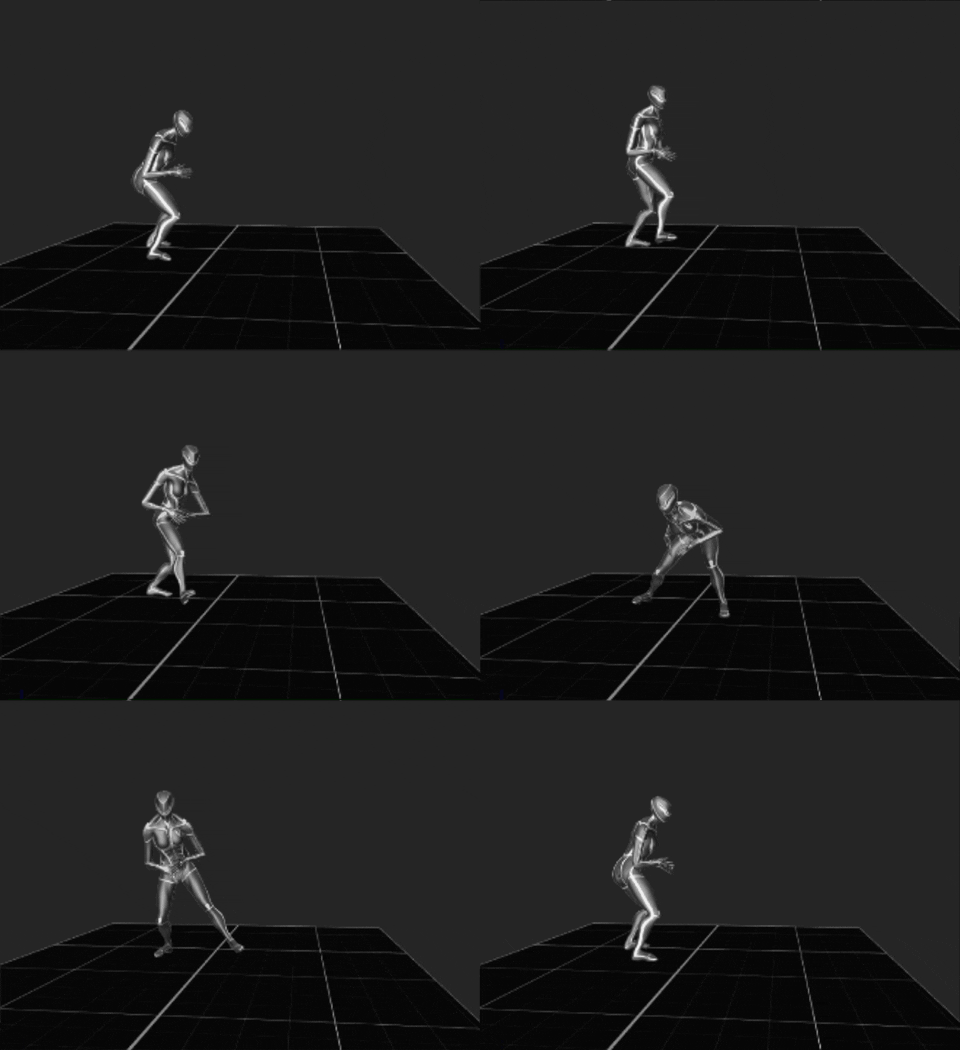
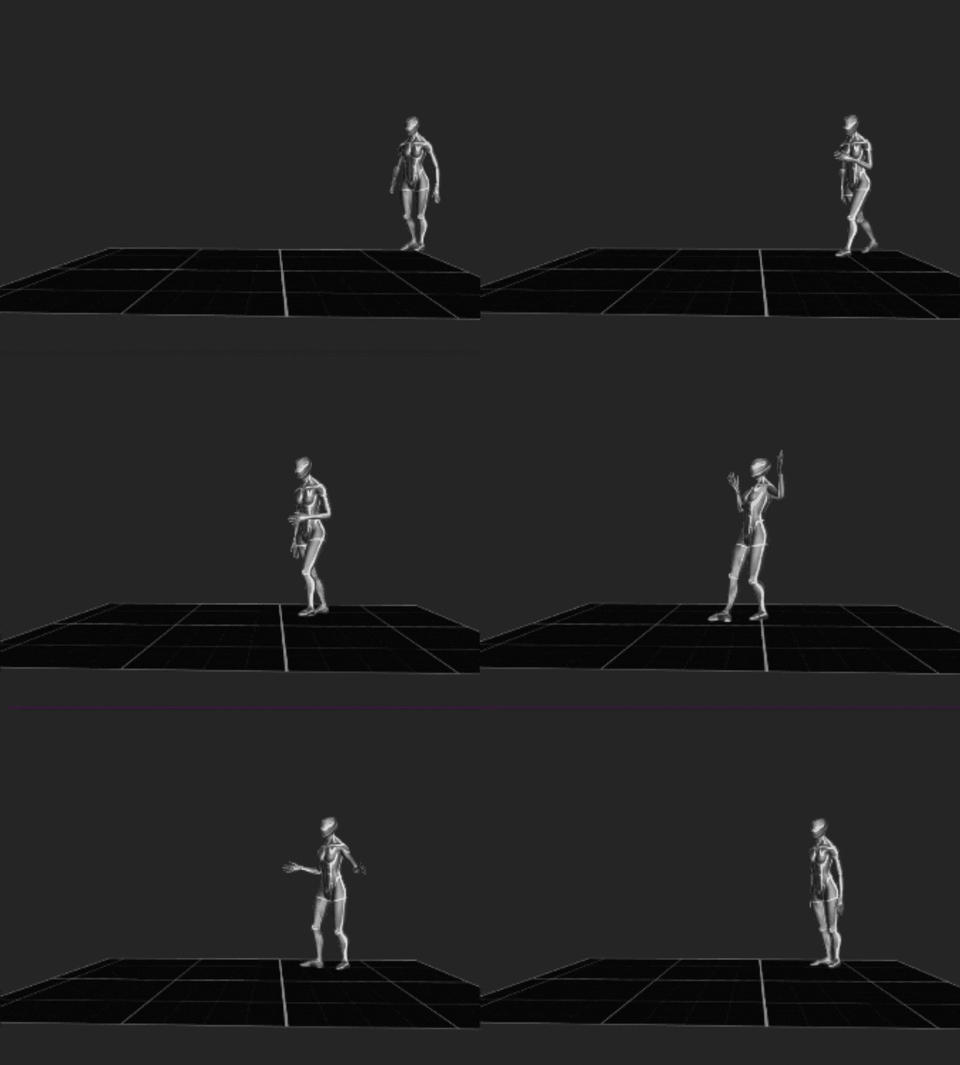
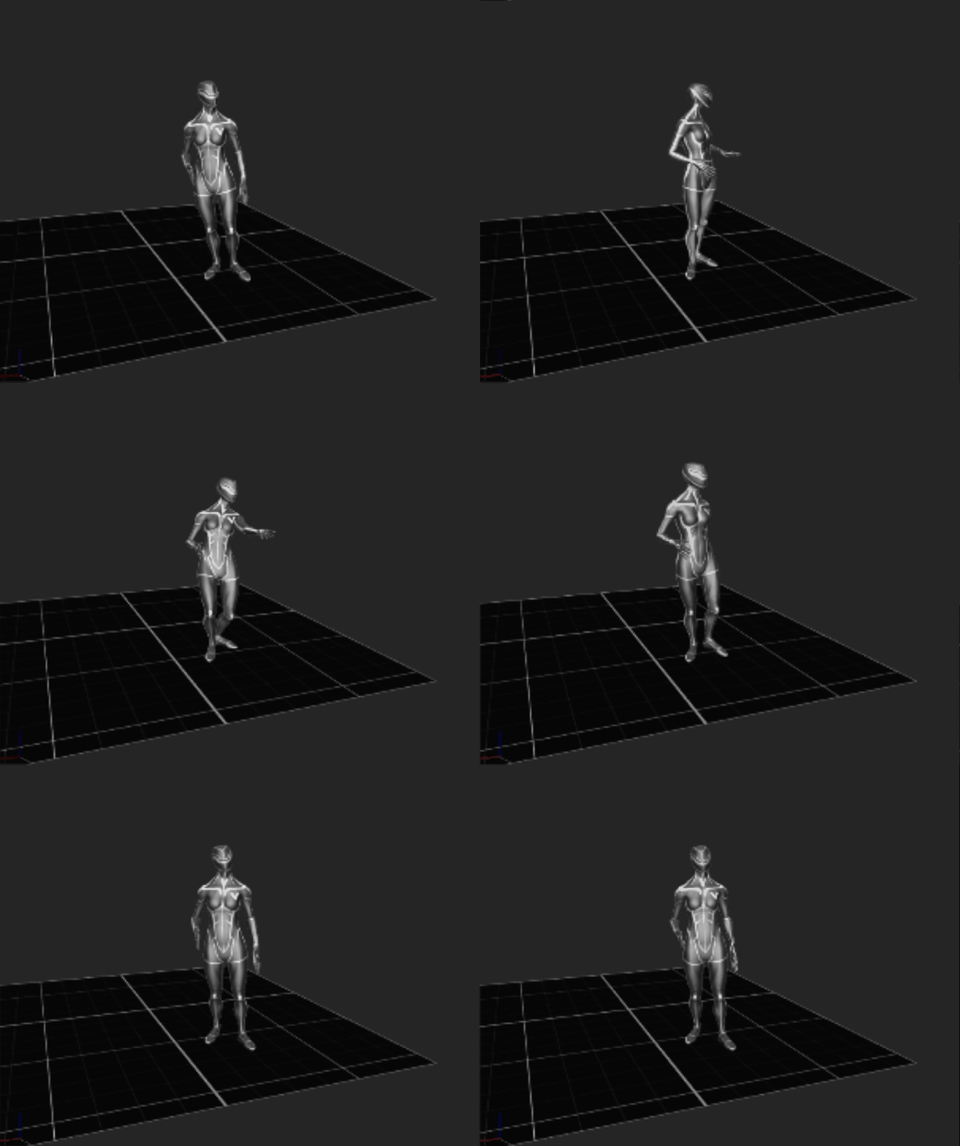
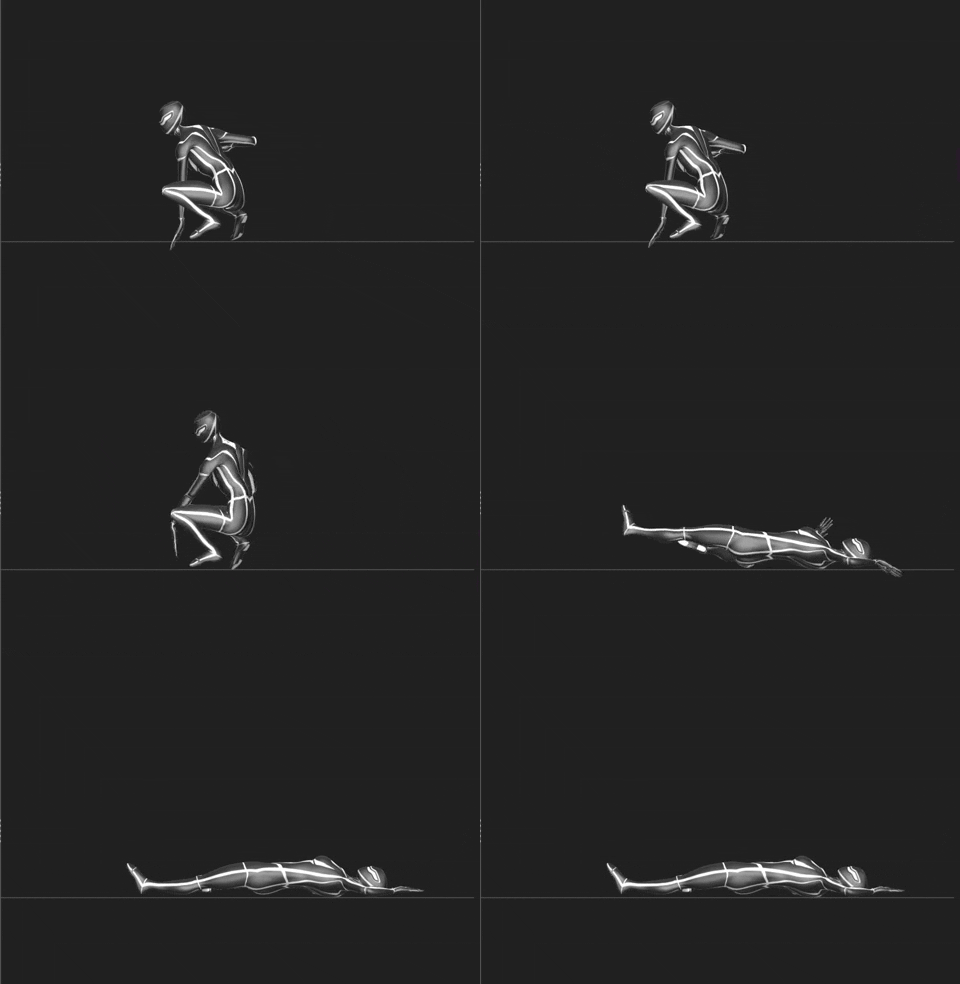
In addition to the splines, we wanted to include more animated movement that would help to add realism to the scene. All of these animations were created using Vicon Shogun's Motion Capture system.
Each member of the team was responsible for creating the animations for one of the characters. The Mocap for TX-77 was performed by Jennifer. The Mocap for Thorbo was performed by Matt. The Mocap for The Monster was performed by Ahmad. For Murdock, fellow UMD alum, Karenna Foley was enlisted to perform the Mocap.
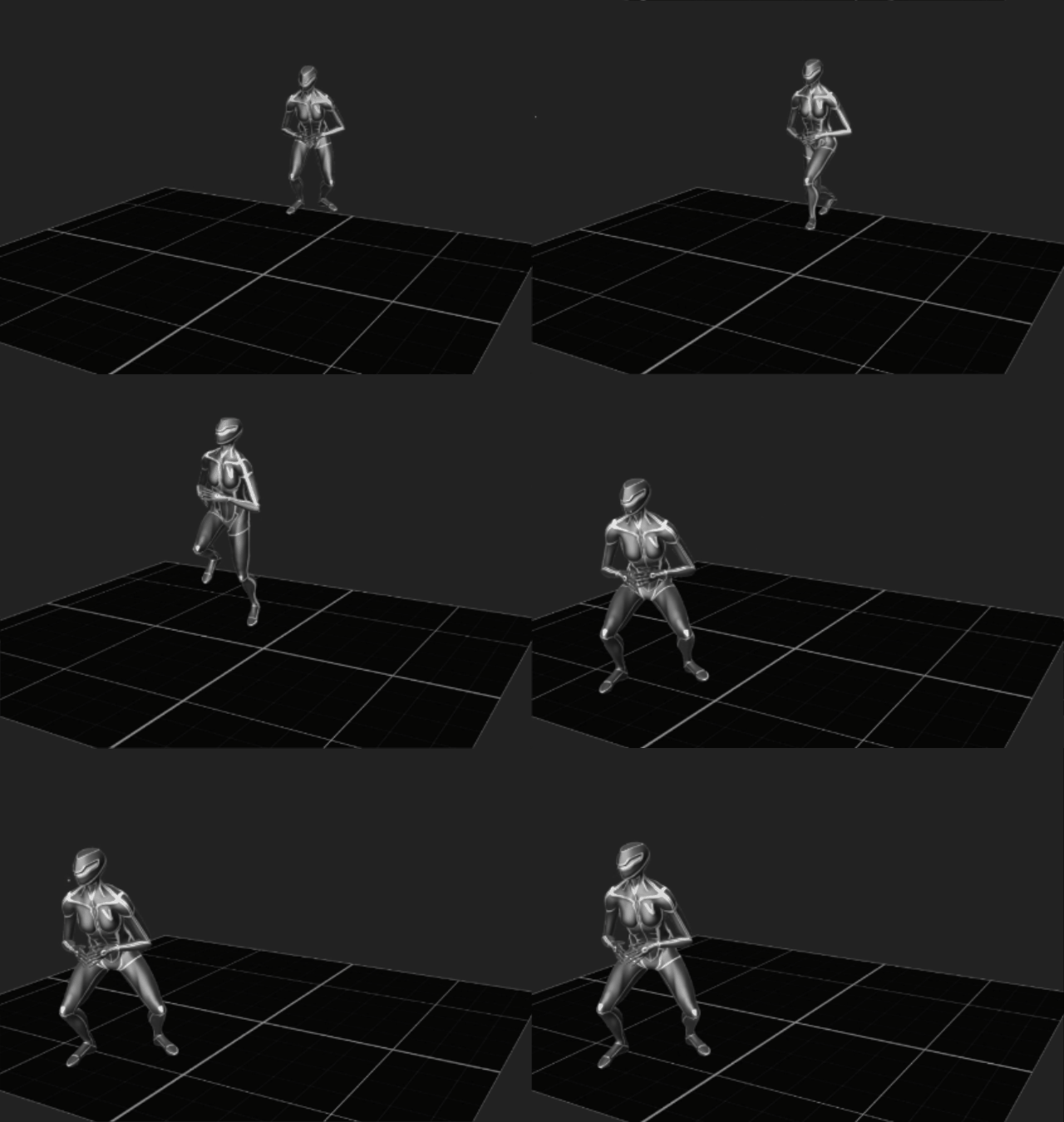
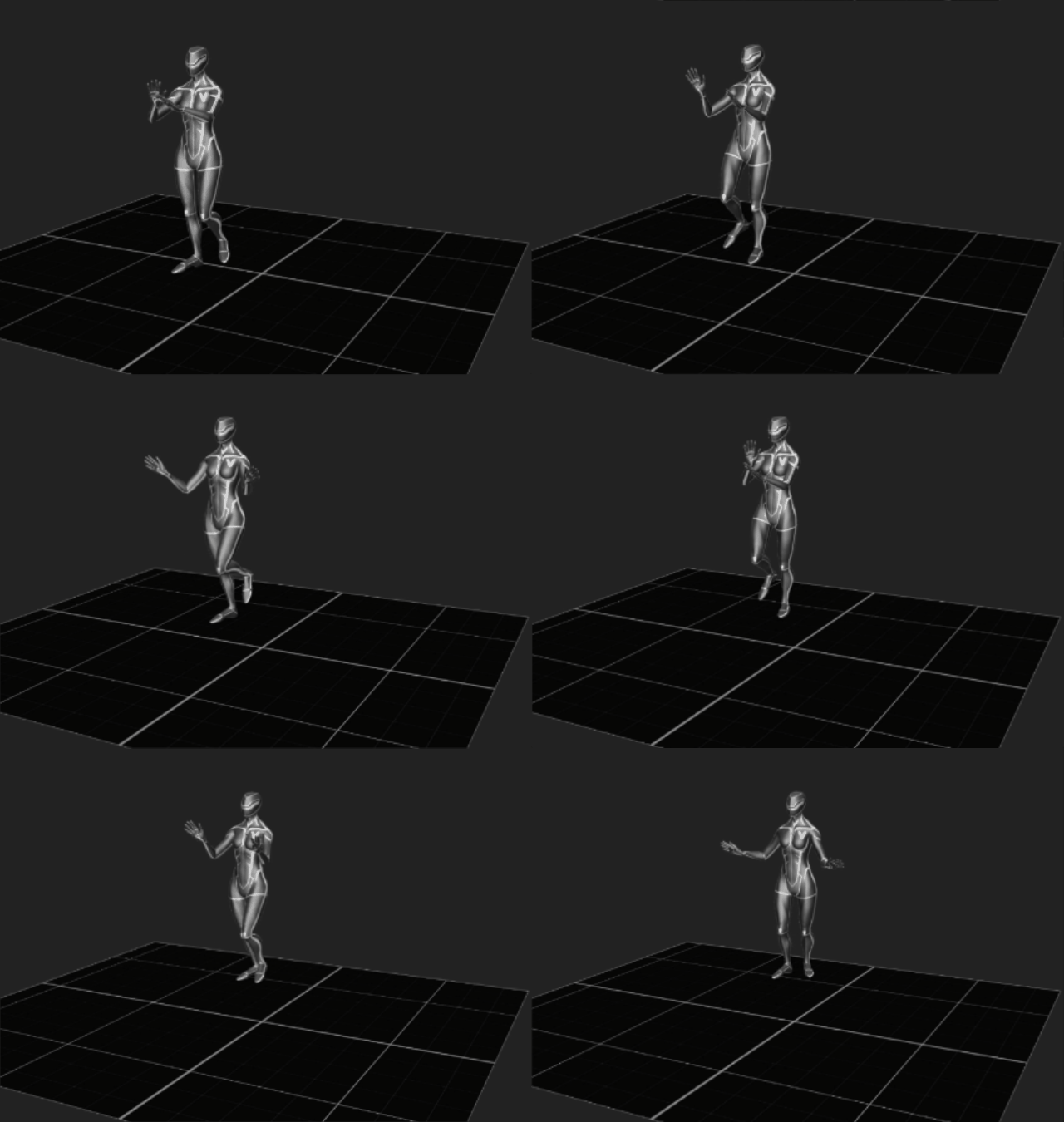
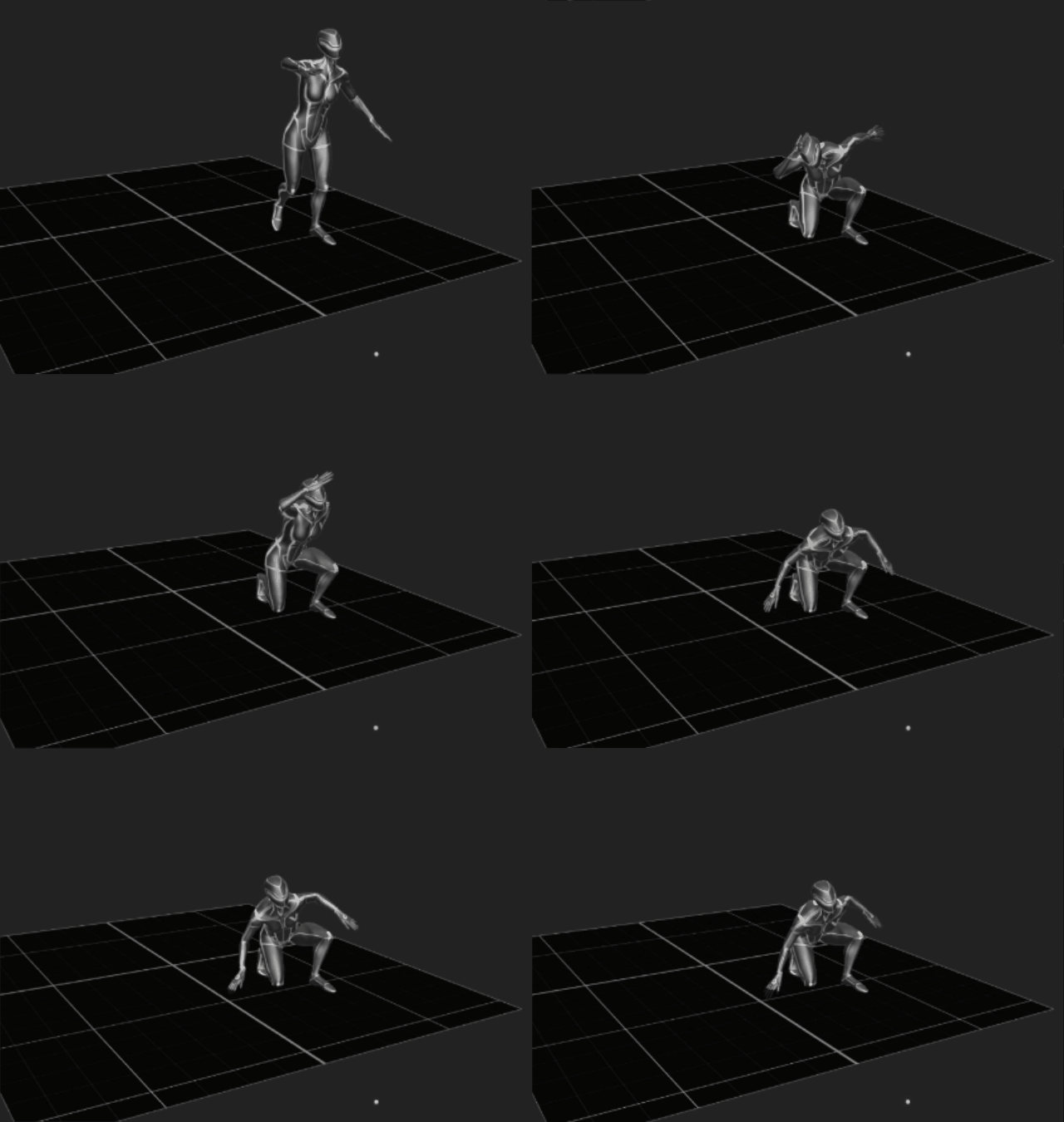
In total, there were 95 unique Motion Capture animations recorded. These include the animations for walking, running, crawling, turning around, pressing buttons, and many more, all customized to each character in the experience. A few examples are depicted here:

All of these animations were controlled in Unity using an Animator Character Controller for each character:

The Sound
Point of Perspective is fully voice acted. Using an NT1-A Rode Microphone and the Reaper Digital Audio Workstation, each member of the team recorded voice lines for one of the characters. Murdock's lines were recorded by Matt, TX77's lines were recorded by Jennifer, and the Monster's sounds were recorded by Ahmad. Karenna was once again enlisted, this time to record the lines for Thorbo.
After having the lines recorded, voice effects were added to the characters in order to give that their distinct "astronaut" and "robot" feel.
A sample of some of the voice lines can be found here:
The Code
In order to bring all of these elements together, Unity scripting was completed using C#. All of the programming was completed by Matt. The primary script was to control the movement along the Spline, including stopping and starting movement, activating voice lines, triggering animations, and rotating between various different perspectives.


In addition to this MoveAll.cs script, various other scripts were completed to control specific events (which were then referenced by this main script). A few examples can be found below:


This Github repository contains all of the scripts used in this project: https://github.com/myack99/Point-of-Persepctive/tree/5f6c5c7ae42dcec89f7bac696ff4514ab6c66bc5/Assets/_PROJECT/Scripts
Putting It All Together & Showcase
With everything combined together in Unity, the next step was figuring out how to present the piece. One important idea that was decided upon was the inclusion of security camera footage. Throughout the virtual environment, there are security cameras watching the characters. These security cameras project footage onto a nearby screen for audiences to watch while someone is paying through the experience in VR. With this implemented, multiple people were able to experience the Point of Perspective at the same time. Provided here are a few screenshots of the setup for the showcase, which was on Thursday, May 9, 2024, at the University of Maryland.


Reflection
Overall, the final result was moderately successful. There definitely was a large scale back on the project since the initial plan. The final project also contained a few small bugs. However, the experience still appeared to be enjoyable to participants. A large contribution to this was our inclusion of the security camera footage, which really helped engage the audience so that more than one person could experience the game at the same time. If doing this project again, there are definitely several things that would be done differently, but overall, Point of Perspective was successful with what was accomplished.